I’M NOT THE PROBLEM?!
Written by Carly Walter
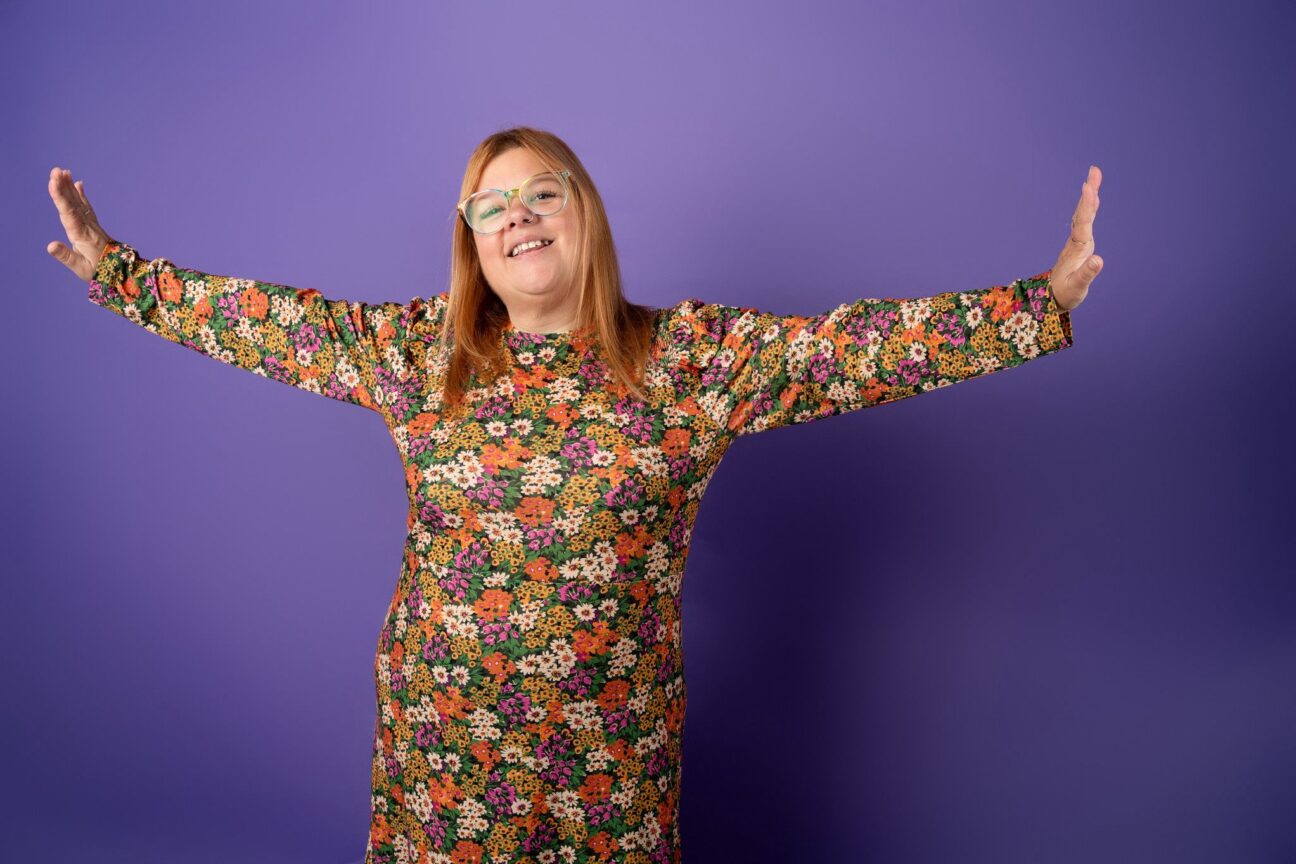
For years, I thought I was the problem.
I was trying to navigate a brain and body that seemed to operate by completely different rules depending on the day, the week and, as I later discovered, my hormones.
I spent years being given explanations that never quite explained me. Anxiety. Depression. Stress. Burnout. Try harder. Rest more. Exercise. Look after yourself.
But nobody was joining the dots.
I was eventually diagnosed with ADHD later in life, and suddenly so much of my past made sense. The overwhelm, executive dysfunction, emotional dysregulation, rejection sensitivity, sensory overload and the sheer amount of energy it had taken to function in a world that wasn’t designed for my brain.
But ADHD was only one piece of the puzzle.
I also experienced PMDD and then perimenopause, and I began to understand something that I now believe we urgently need to talk about more: neurodivergence and hormonal health cannot always be treated as separate issues.
When hormones and neurodivergence collide
For many neurodivergent women, hormonal changes can have a huge impact on how manageable our ADHD or autistic traits feel.
Emotional regulation can become harder. Executive function can disappear. Sensory sensitivities can intensify. Sleep can deteriorate. Anxiety can increase. Things we could cope with last week can suddenly feel impossible.
Yet when women seek help, those dots are still too often looked at separately.
We might talk to one professional about ADHD, another about hormones and another about our mental health.
Meanwhile, we’re the ones trying to work out how all the pieces fit together while already overwhelmed.
My own experiences eventually changed the direction of my life and work.
My background spans health and wellbeing, psychology, counselling, coaching and years working within the NHS and public sector. I now specialise in supporting neurodivergent women through ADHD, PMDD, hormonal changes, burnout and the messy overlap between them.
Through that work, I kept seeing versions of the same story.
Women who were intelligent, capable and incredibly self-aware but completely exhausted.
Women who had read the books, listened to the podcasts, downloaded the apps and tried the planners.
Women who knew what they were “supposed” to do but couldn’t necessarily access that information when they were dysregulated, overwhelmed or experiencing executive dysfunction.
That distinction became really important to me.
Knowing what might help isn’t the same as being able to do it when your nervous system is overloaded.
The idea behind MAGI
That is ultimately what pushed me to create MAGI.
MAGI is an AI-powered behavioural health and wellbeing platform being developed specifically with neurodivergent women and girls in mind.
I didn’t want to build another wellness app filled with information and expect an overwhelmed person to work out what they need.
I wanted to explore something much more personalised.
What if technology could begin to recognise what state you’re in and reduce the cognitive load?
What if, instead of giving you ten things you could do, it helped you identify the one thing that might help right now?
Sometimes that might be a regulation exercise.
Sometimes it might be breaking a task into something manageable.
Sometimes it could be decision support when your brain has completely hit capacity.
Other times, you might need to recognise a pattern between your hormones, sleep, sensory load, stress and emotional regulation.
MAGI is being designed around those real-life moments.
Not the perfect morning routine version of wellbeing.
The sitting-in-your-car-unable-to-go-into-the-supermarket version.
The staring-at-an-email-for-three-hours version.
The “I know what I need to do but my brain will not let me start” version.
The version of neurodivergence that many of us actually live.
Built with neurodivergent women, not just for them
One of the most important things to me from the beginning has been co-design.
I’ve spoken to hundreds of women through research, surveys and conversations about their experiences and what they actually need from support.
Again and again, I’ve heard how exhausting it is having to constantly explain yourself or adapt advice designed for neurotypical people.
So MAGI is being developed differently.
Low cognitive demand matters.
Accessibility matters.
Personalisation matters.
Language matters.
Emotional and sensory regulation matter.
And safety absolutely matters.
MAGI isn’t being developed to replace therapists, doctors or clinical care. There are times when human and medical support are essential.
I see technology as something that can help fill the enormous space between appointments, waiting lists and those moments in everyday life when you need support now.
Turning lived experience into something useful
Creating MAGI has also changed how I think about my own story.
There were years I would happily have deleted from my life.
Years of feeling misunderstood.
Years of wondering why things that seemed straightforward for other people could feel so difficult for me.
Years of fighting my own brain and body because I didn’t understand what they were trying to tell me.
I can’t change those years.
But I can use what I learned from them.
My lived experience isn’t the only thing behind MAGI. It sits alongside research, clinical expertise, technology, co-design and the experience of other neurodivergent women.
But it gives me a very clear reason for building it.
I know what it feels like to need help and not be able to find the right kind.
There has to be a better way
We’re finally having bigger conversations about women and ADHD, autism, PMDD, perimenopause and menopause.
But awareness alone isn’t enough.
We need support designed around how neurodivergent women actually experience life.
We need to understand the relationship between brains, hormones, nervous systems and environments.
We need tools that work on difficult days, not just good ones.
And we need neurodivergent women involved in creating those solutions.
MAGI grew from my own question:
“There has to be a better way to support women like me.”
I’m now trying to build it.
Learn more about MAGI here