A REFLECTION ON DOUBT, MASKING AND THE COST OF CATCHING UP
Written by Tahirah Yasin
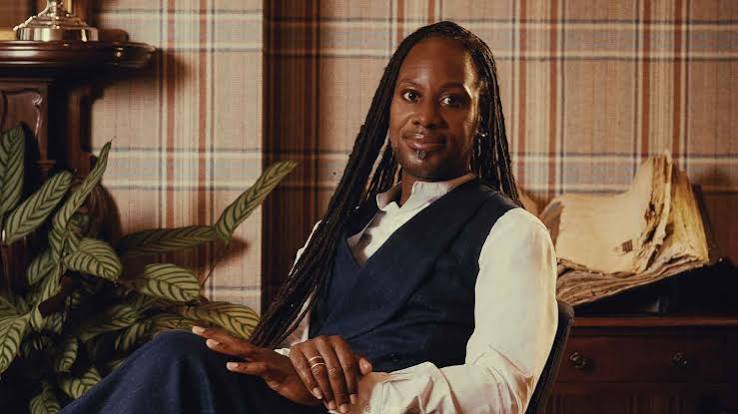
People have asked me about the way in which I produced my own work, not about the meaning of it, not about where I should go in the future, but about the way in which I produced it.
Originally, I had intended to prepare a different kind of newsletter this week. However, Professor Jason Arday died on 14 August, and as a result, I was unable to write anything else and couldn’t write at all for several days. I had seen his face and had always admired his determination; even in the face of all the difficulties he had encountered, he had succeeded. This piece is intended as a reflection and not as an article; I’m not going to tell you what you should think, but rather what occurred to me, since I think that some of the same things occurred to you as well.
A note on care
The public record shows that Jason Arday was appointed Professor of Sociology of Education at Cambridge in March 2023, having been described as the youngest Black professor in the university’s history. He frequently spoke in public about his autism and about having been diagnosed in childhood with global developmental delay. He gave a talk at the National Autistic Society’s professionals conference on these same topics. In the summer of 2026, his doctoral research and his autobiographical statements came under continuous public examination. He denied any wrongdoing. He resigned on 5 August and died on 14 August at the age of 41.
A certain amount of the material that has been published about him is serious and detailed, and since academic integrity is important, especially to those people who have the smallest margin for error, it by no means follows that you should ignore it. However, there was another thing which I noticed occurring at the same time, and that is the point I wish to discuss. Individuals who had no clinical training and no access to any records started to discuss in public whether or not he had ever been autistic
All people who are neurodivergent and watched it picked up a lesson from it: what disclosure can amount to if you ever find yourself out of favour. What remained in my body was the interrogation, not the allegations.
How were you able to generate this?
People have inquired of me as to how I created my own work.
That is not what I had in mind by it. It is not what I should do with it next. It is not the kind of question you put to a colleague whose way of thinking has attracted you. There is another question that is delivered with a certain flatness of voice and a specific kind of eye contact, and it is never quite an accusation, so you can never quite reply to it.
You’re familiar with it; it may sound like curiosity, but it actually is an audit.
The flaw in it is perfect: since there is no satisfactory reply, you appear defensive if you do explain yourself, evasive if you don’t, and, if you explain yourself well, you’ve shown that you are the kind of person who has prepared a defence.
I have also received marks that didn’t match the work in front of me. Not a single time, and when you do it, you become the one who raises issues.
It sounds as if it’s curiosity, and in fact, it is an audit.
What it cost, and what it built
This is the situation: I find it more difficult to write.
I did keep going.
I put in more effort than the other people did. Not in a figurative sense, but in a tangible way. I worked longer hours, started earlier, produced more drafts, included more evidence and references than were required, and checked everything three times over before handing it out. The reason was that I had realised my work would be examined more closely, so I made sure it could withstand such scrutiny.
It succeeded, thanks to my persistence. I am a qualified therapist and supervisor, and I manage this directory; I ended up here by refusing to stop.
I would like to highlight the cost of that, since we don’t talk about it enough in this community.
To work at that level continuously and at the same time conceal controlling your tone, your facial expression, your enthusiasm, your directness, the version of yourself that is apparent to people in the room is not showing resilience; it is a kind of tax, one that is paid every day by those who can least afford it, and for which no receipt is given.
Resmaa Menakem describes fawning as a way of responding to trauma that is, placating a threat you can’t escape. Masking is, in fact, fawning, and for a great many of us, there are two masks operating simultaneously: one relating to our neurotype and the other concerning how our race is perceived as we enter a room. The exhaustion resulting from this is not merely the sum of the two; it is multiplied.
We refer to it as work ethic. In some cases, it is; in other cases, it is the nervous system that has properly evaluated the room.
The times I been questioned about my work, told, I was surprised you delivered, I didn’t expect you to do that.
How about well done despite your challenges. I work extremely hard to show up, to work and to keep going. It is debilitating, it heart wrenchingly difficult, but I keep going, not for the claps, or the accolades but for my own younger self to know that I still believe in her.
The exception is not equivalent to membership.
And from time to time, one of us manages to get through.
The first, the youngest, the only, and I must make it clear that this is a statement about the failure of an institution, not about the exceptional nature of an individual.
To be an exception means merely to be exposed, not to be included. An anomaly has no counterparts. There is no one else who has done it before to stand beside you, no one you can ask, and no place where you can admit that you are having difficulties, since you are the very proof that it is possible.
We aren’t noticed. Afterwards, a few of us are noticed, and in that case, it’s not safe. It’s like a spotlight.
We continue despite the struggles, despite knowing if we have any cheerleaders. Despite all the challenges.
The ones who were never seen at all
I find myself thinking about a certain number.
In England, the figure for children between the ages of 10 and 14 is one in thirty-four having an autism diagnosis; for people aged 70 and over, it is one in six thousand (O’Nions et al., 2023). A review carried out by King’s College London in 2025 estimated that approximately 89% of adult autistic people between the ages of 40 and 59 and about 97% of those aged 60 and over had never been identified.
Nine out of ten, then almost everybody.
An entire generation is described as difficult, rude, lazy, slow, sensitive, and overdoing it, never having been evaluated or given any such criticism. They work three times as hard yet never know why.
Among that generation, it was the groups for whom our diagnostic tools were least suited to detect women, Black and brown people, the poor, migrants, and Muslims.
This is the group I am considering this fortnight, not just the one whose name is known, but the thousands of others whose names are unknown.
Final thoughts
Chellappa (2026) advocates a shift from seeing disability as something one has to something that is imposed.
No one is disabled as a result of their neurology; it is institutions that disable people by treating inclusion as a mere headline, by systems that have never taken account of the thousands who came before, and by rooms which are designed for one nervous system and one set of social behaviours.
Disablement is an action on our part that implies we have the ability to cease carrying it out.
I can’t give you a neat conclusion, but here’s this point: whenever anyone has been asked about the way they produced their own work, they are not imagining the attitude in question. And if you’ve reached the position you’re in by working twice as hard, then that should be recognised and must never have been the cost of getting in.